CROP CAMP 2026
Build your 2027 bouquet plan. Plant on Purpose.
A five-day live intensive for flower farmers who are ready to build a crop plan around what they actually plan to sell.
October 11–15, 2026 | Live 5–6 PM PT | Replays included | 40 spots Only

Most of us piece together a crop list from what looked good on Instagram and what other farmers swear by.
Maybe you have no idea what to grow. Every farmer you ask gives you a different answer, every seed catalog gives you another idea, and your list keeps getting longer.
Or maybe you’re a few seasons in and have the opposite problem. You know you can grow a lot of things. You’ve trialed them. You’ve got leftovers from last year. You keep planting what you’ve always planted because, well, it’s there.
You liked it. Someone recommended it. You grew it last year. It looked gorgeous in somebody else’s feed.
The problem underneath both is the same: there isn’t a clear business reason behind what goes in the ground.
Nothing on that list got picked for the job it has to do. So you end up with six beautiful dainty fillers that bloom at the same time but don't fill out a bouquet. Or plenty of focal flowers and nothing to fill with. Or a variety everybody raves about that has never once done well for you.


You grew a lot of flowers, and you still can’t make the bouquet you envisioned.
One week you’re short the focal flower that would have pulled the whole thing together. Next, you’ve got buckets of filler and nowhere to use it. Then you’re standing at the design table thinking the bouquet itself is the problem.
My students are always beating themselves up about their bouquets, calling them things like:
“A hot mess.”
“Like a kindergartner made them.”
“Like a science fair experiment.”
That usually isn’t a bouquet-making problem. The decision happened months earlier, when you decided what to plant.
If your bouquets aren’t coming together, take a look at what you planted.


Start with the bouquet. Then work backward.
Most crop planning starts with flowers. What do I want to grow? What seeds should I order? How many beds can I squeeze in?
I want you to start with the business.
What are you planning to sell?
How many bouquets do you need to sell to hit your goal?
What flowers need to be in those bouquets?
What do you need to plant, how much, and when, to make that possible?

If bouquets aren’t your primary sales channel, the same process still applies.
You start with what you plan to sell, whether that’s mixed bouquets at your farm stand or straight bunches headed to florists, and then work backward into what deserves space in the field.
That’s the Plant on Purpose method.
You build the bouquet plan first. Then every crop has a reason for being there.
If you’re brand new, this gives you a way to answer “What the heck should I grow?” without copying somebody else’s farm.
Because (spoiler alert): what worked for them won't work for you, anyways.
If you’ve been growing for a few seasons, it gives you a way to look at that sprawling crop list and decide what has earned another year.
Same process, just a different starting point.

The plan you build will change the way you farm, for good.
I could hand you my crop plan that tells you what to sow and when. Every farm I worked at did exactly that to me.
But here’s the thing about those spreadsheets: most of them aren't even crop plans. They're sowing schedules.
That's the last step of crop planning, and it's the least important one. It tells you when to put seeds in the soil. It doesn't tell you what to grow, how much of it, or why. Somebody handed you the final page and called it the plan.
It took me months to admit I couldn’t use it. It took me even longer to understand why.
I hadn’t made the decisions behind it. I didn’t understand how the sales goal connected to the field, why one crop deserved more space than another, or what I should change when the season changed.
So I started building my own. And that process changed how I farmed because making the plan forced me to understand the farm itself.
You set a real sales goal. You connect what’s in the field to what you’re actually selling. You see where waste creeps in. And months later, when you’re deciding what to cut in June or what to reorder in August, you understand the reasoning behind the plan because you built it.
That’s why Crop Camp is hands-on. I’ll teach you. I’ll guide you. I’ll look over your work. But I’m not handing you a done-for-you crop plan.
Doing the planning is what makes you better at planning your farm.
You can watch a lesson and understand it.
You can look at a list of crops and make a pretty good guess about what might work.
The hard part is sitting down and actually doing the plan from start to finish.
You have to pick a sales goal. Make decisions. Do the math. Put dates on the calendar. Finish the thing.
And you’re trying to do that while there are flowers to cut, customers to answer, and about twelve other jobs that feel more urgent.
That’s why Crop Camp exists.
For five days, the crop plan gets a place on your calendar. I teach one piece. You work on your actual plan. We troubleshoot real decisions in the room. You have other farmers working alongside you. And there is a deadline at the end.
Then I look at the finished plan myself.
Knowing how crop planning works is the easy part.
Welcome to Crop Camp 2026
Crop Camp is a five-day live intensive where you’ll build your 2027 bouquet plan from your sales goal all the way through what to grow, how much to plant, and when to sow and plant it.
We meet live October 11–15 from 5–6 PM PT. Every live session is recorded, so there's no falling behind if you can’t be there every evening.
There’ll also be additional smaller-group accountability sessions, plus an accountability partner/buddy to help you keep moving.
Cassie Pummer from Jig-Bee Seeds will also join us as our TA to help with sowing and planting dates, plus a bonus session on hardy annuals.
By the end of Crop Camp, you’ll have:
A finished 2027 bouquet plan built around a real sales goal.
A focused crop list where each flower has a job in what you plan to sell.
The quantities you need to plant instead of buying and starting on a hunch.
Sowing and planting dates you can actually put on the calendar.
Personal feedback from me on your finished plan, including what looks solid and what I’d fix before you plant.
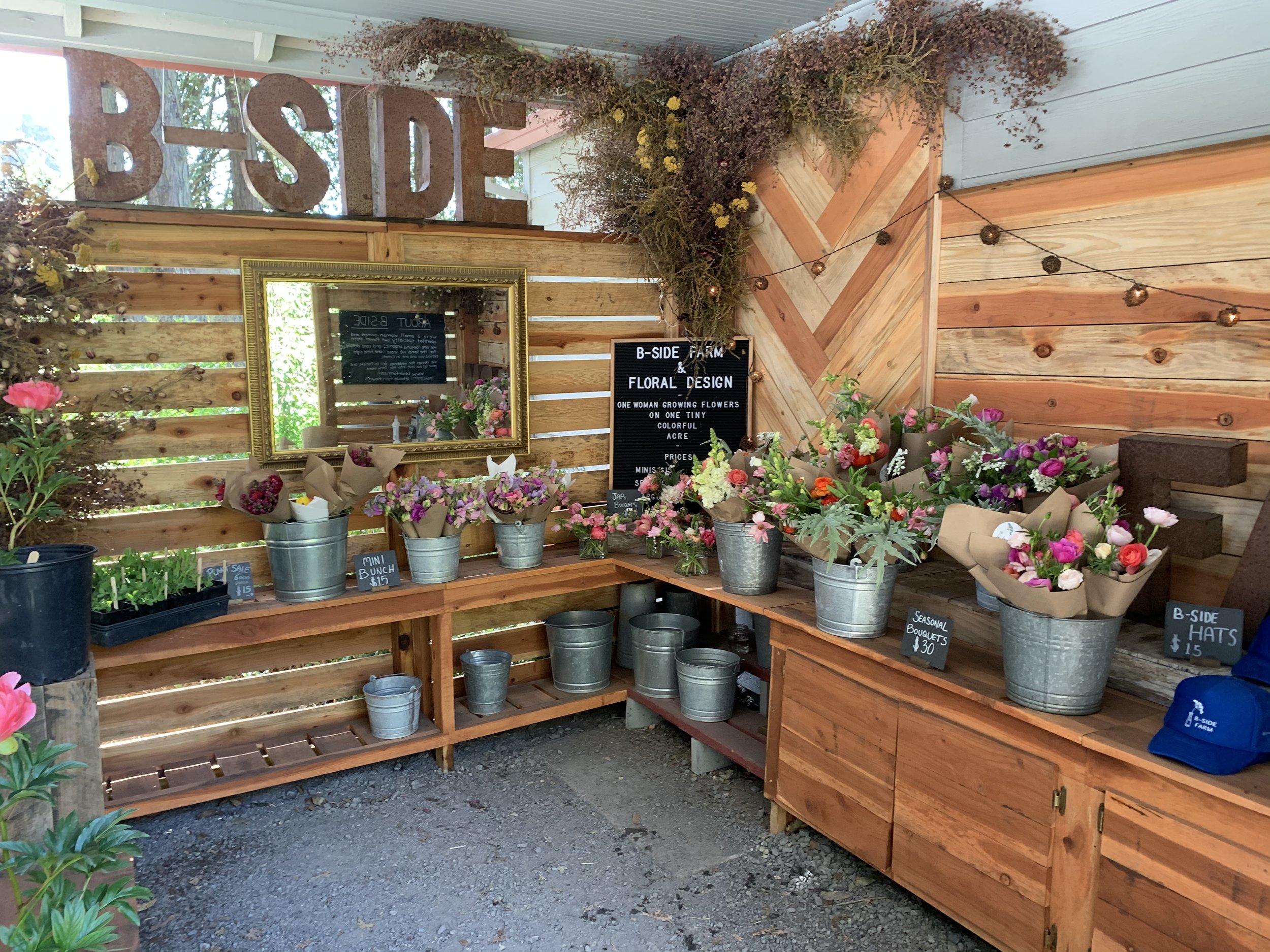
Here’s what we’ll do during the five days:
Day 1: Set your sales goal
We start with what you actually want the farm to sell. You’ll choose a real sales goal and define the bouquet sales behind it. If you've never sold a bouquet, we'll set your first goal together, and I'll give you real numbers from farms at your stage to work from.

Day 2: Build the bouquet
You’ll decide what needs to go into the bouquets you plan to sell. This is where the crop plan starts taking shape around an actual product instead of a wish list.
Day 3: Build your crop list
Now we trim the fat. Beginners use the bouquet plan to narrow down what belongs on the farm. Experienced growers use what they’ve learned from past seasons to decide what deserves another year.
Day 4: Do the math
How many stems, plants, and trays do you realistically need? This is usually where heads start spinning. We’ll work through it together so you aren’t left staring at the numbers and guessing.
Day 5: Put dates on the calendar
You’ll map out when to sow and plant so the flowers show up when you need them. You finish with a plan you can actually use for the 2027 season.
Then your plan gets a final review.
Submit your finished plan during Camp, and you’ll receive a scorecard showing where your plan looks solid and where something may need another look before you plant. You’ll leave with a reviewed, ready-to-use plan instead of wondering whether you missed something.
Who Crop Camp is for
✓ If you’re just starting and thinking, “What flowers do I even grow?”
Crop Camp gives you a way to make that decision based on your own bouquets, sales goals, space, and season instead of collecting another farmer’s favorite-flower list.
You’ll finish with a shorter, more intentional list and a reason behind what you’re planting.
“The crop planning worksheet was exactly what I needed to help figure out how much of everything to plant, which relieved so much stress!”
✓ If you’re a few seasons in and thinking, “What should I stop growing?”
You’ve already done the experimenting. You know what grew. You know what sold. You probably also know which crops ate up bed space, gave you oddball leftovers, or kept getting planted because they were already on the list.
Crop Camp gives you the structure to review what you’ve learned and build the next plan around the farm you’re running now.
“Narrowing my crop list was the most impactful for me so far.”
Crop Camp is for flower farmers who are ready to make what they grow match what they actually sell.
For most of you, that means building a better bouquet plan.
If you also sell straight bunches or wholesale to florists, you’ll use the same process to look at what your buyers actually want, what you had too much or too little of last season, and what deserves space in the field next year.
If you want somebody to hand you a done-for-you crop plan, this won’t be the right fit. The value is in learning how to make these decisions for your farm and having me there to help you make them.
What you get when you join:
Five live teaching + guided implementation sessions with Lennie, October 11–15 from 5–6 PM PT, plus a kickoff call on Sunday the 11th at 9am PT.
Replays of every live session, so missing a session does not put you behind.
Additional self-organized group accountability sessions.
An accountability partner/buddy.
Live coaching where a few real plans get workshopped in the room.
Lennie’s personal markup of your finished plan.
Support from Cassie Pummer of Jig-Bee Seeds on sowing and planting dates.
A bonus hardy-annuals session with Cassie.
Your finished 2027 bouquet plan.


Crop Camp pricing
Early bird: $400 when you enroll October 5–7
Flower Farm Business Academy alumni: $300 throughout enrollment
general enrollment: $495
Payment plan: 2 monthly payments of $265
Enrollment closes October 11. Crop Camp begins that day.

VIP is a +$495 upgrade and is limited to approximately 10 spots.
A live 45-minute one-on-one with Lennie the week after Camp to go through your finished plan and fine-tune it for your farm.
One revision re-review after you make changes, so Lennie can give the updated plan a final, final look and detailed, thorough analysis.
A VIP-only group office-hours call.
Lennie’s fully built-out master spreadsheet + plant-order cheat sheet.
VIP can be added to either a general or Flower Farm Business Academy alumni Crop Camp enrollment.
Want Lennie even closer to the plan? Add Done-With-You VIP.

-
![]()
“The crop planning section was a game changer for me. You get a clear picture of your plan, and I was able to set concrete dates for planting each seed selection, along with the planting-out dates. I don’t need nearly as many plants as I thought I would!”
— Ronda J.
-
![]()
“This part alone was worth the cost of the class. Holy cow.”
— Ivy
-
![]()
“Hands down… worth every penny and more. Jam-packed with more information than I anticipated, and tremendously helpful tools I’ll be referencing for years. The most succinct and clear guidance I have received as a new farmer.”
— Fern
Frequently Asked Questions
-
You’re still in the right place. The bouquet plan is the main framework I’ll teach, but the bigger process is about working backward from what you actually sell.
If most of your flowers leave the farm in straight bunches to florists, we’ll look at that sales channel instead: what your buyers ask for, what you sold through, what you had too much of, what you never had enough of, and how much you actually need to grow next season.
You’ll still leave with the same thing everyone else does: a crop plan where what goes in the ground has a reason for being there.
-
That’s one of the main reasons Crop Camp is live. Crop planning tends to sit in the “I’ll get to it” pile while the farm keeps handing you work that has to happen today. For five days, the plan gets scheduled time, a deadline, and people expecting you to keep moving. If you miss a live session, every session is recorded and available to watch on your own time.
-
Yes, and this is the right time. You don't need a sales history to set your first goal — you need a starting number and a reason behind it. On Day 1 we pick that number together, using real examples from farms at your stage, and you'll leave with a goal you can plan against. It will change as you learn what your market buys. That's expected. The point is that you're planting toward something.
-
No. We get into the numbers on Day 4, and we do them together. If your head starts spinning once stems, plants, and trays enter the conversation, bring that with you. You’ll have live support while you work through your own numbers.
-
Because the useful part is understanding why your plan looks the way it does. Building it yourself forces you to connect your sales goal to your bouquets, your crop list, your quantities, and your timing. That decision-making process gives you something a borrowed spreadsheet can’t: a working understanding of your own farm.
-
That's great, this plan works for you too (in fact, it'll be easier for you). We've worked with wholesale farmers who sell thousands of stems a week and coached them to simplify their plan based on what actually sells, and they're still thanking us.
-
No. Crop Camp is built around bouquets, whether you sell them at a farm stand, market, through a CSA, to florists, or through event work. Your plan starts with what you intend to sell.
-
The planning process starts with your sales goal and your farm rather than a universal crop list. Cassie Pummer from Jig-Bee Seeds will also be with us to support sowing and planting-date questions.
-
Every session is recorded. Live attendance gives you the benefit of working alongside the group and getting help in the room, but there is no “falling behind” if your farm schedule keeps you from attending every evening.
-
Submit your finished plan during Camp. I’ll personally review it and mark what looks solid and what I’d change before you plant.
-
Crop Camp ends with work completed on your farm. You’ll build the plan while we’re together, using your sales goal and your numbers, and I’ll review what you make. The hard part is rarely understanding that planning matters. The hard part is sitting down, making the decisions, and finishing.
-
No. Your fall-planted decisions are made, and that's fine — tulips, ranunculus, anemones, peonies are going in the ground now either way. Crop Camp is the annuals you'll start in spring, which is most of your list and all of the decisions you haven't made yet.
-
Bring your orders, and we'll work out which ones have actually earned a bed. You're allowed to give seeds away.
FAQs for Flower Farm Business Academy Alumni
-
You already have the underlying crop-planning education. Crop Camp gives you the live implementation container around it: dedicated work time, live coaching, accountability, and my feedback on the plan you’re building for 2027. Alumni pay $300 throughout enrollment.
-
No. I’ll teach what you need during the live sessions. Your existing Flower Farm Business Academy material can be there as a refresher when you want it.
-
No. If you’re ready to build your 2027 bouquet plan with hands-on support, you can join Crop Camp wherever you are in the Academy.
-
What you pay for Crop Camp can be applied toward Flower Farming Business Academy tuition if you decide to join later.
Flower Farm Business Academy is Lennie’s full business training for flower farmers, covering the business systems around crop planning, pricing, sales, and marketing.
See you inside?